

California Roundup: 2026 Legislative Session Closeout Report
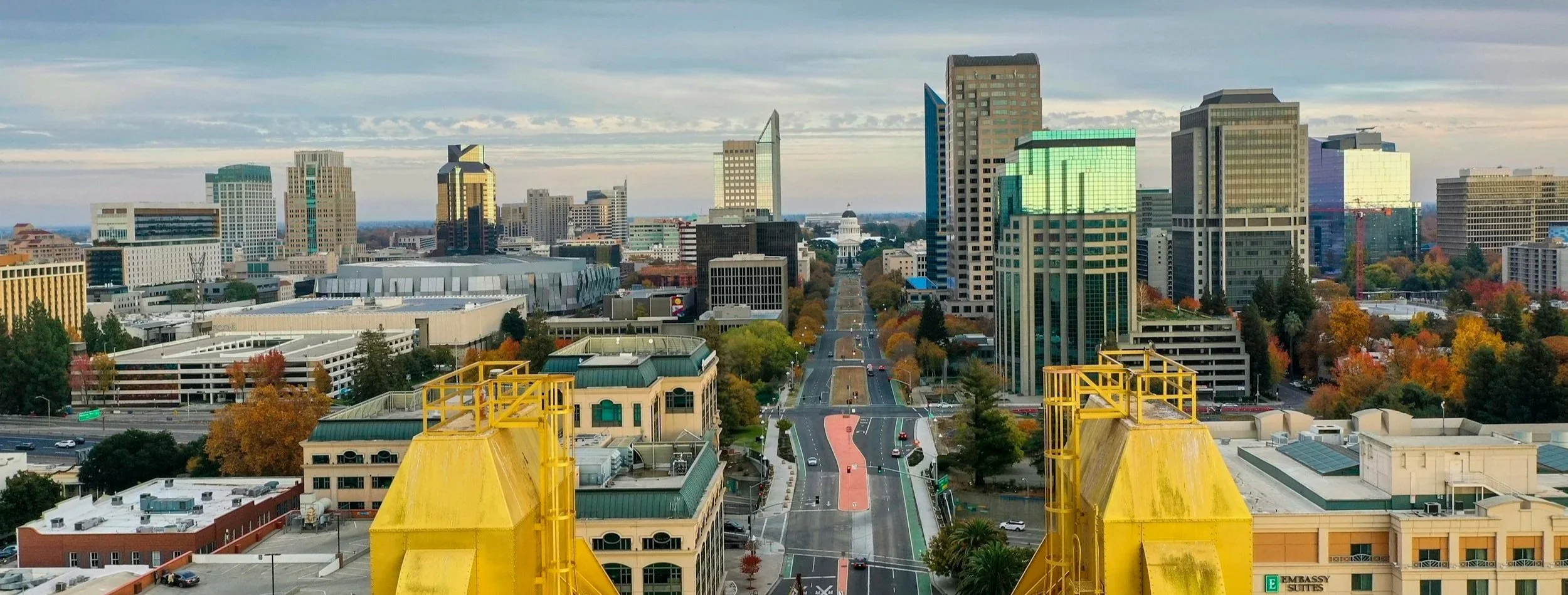
On September 30th Governor Gavin Newsom took final action on hundreds of bills that remained on his desk before the midnight deadline to sign or veto bills. In total, Governor Newsom acted on over 1,100 bills the State Legislature passed during the 2026 legislative session and sent to his desk. In total, he signed 1,040 bills and vetoed 120 bills which was roughly a 9% veto rate. His signings and vetoes were one of the final major duties he completed as he now enters the final three months of his governorship.
As noted in previous legislative updates, Governor Newsom was faced with several policy issues to address which could impact his future national ambitions. This included legislation to solidify a tax credit for the film and television industry, adopting new regulations for social media platforms, allowing permit streamlining for new townhome developments, requiring new state studies to determine viability of emerging fusion technology and small nuclear reactors, mandating new controls on artificial intelligence (AI) in health care decisions, requiring water and energy use assessments for proposed data centers, imposing new policies for the residential insurance claims process, and providing new tools for wildfire mitigation.
Below is the final status of key bills and policy issues the Governor acted on, and some others that failed to make it to the Governor’s desk but will surely come back next year with a new governor and several new legislators to address. Unless otherwise noted, all bills signed by the Governor will take effect on January 1, 2027. Following the results of the November 3rd General Election, a new two-year legislative session (2027-28) will convene on December 7, 2026, following the swear-in of new legislators. A new governor will also assume office on January 4, 2027.
Taxation
AB 2465 (Ortega): would have prohibited tax breaks for businesses that own, operate, or manage a private detention facility or contracts with a private detention facility or federal agency engaging in immigration enforcement to provide covered services as defined under the law. This was one of a dozen bills pushing back against ICE and was a big priority for the Latino Caucus. Status: Vetoed by Governor.
SB 186 (Laird): provides relief to the film and TV tax credit program from the recently enacted budget that included a $5 million cap on tax credits. The bill is a big priority for Hollywood, and it makes improvements to the tax credit program, such as allowing a taxpayer to claim a 95% refund over two years instead of a 90% refund over five years. Status: Signed by Governor. Chaptered by Secretary of State, Chapter 344, Statues of 2026.
AI/Tech
The legislature worked to advance targeted AI, youth online-safety, companion-chatbot, and technology-accountability measures while broader automated-decision-system legislation did not complete passage. KP Public Affairs was actively involved in lobbying and negotiating all of these bills on behalf of clients.
AI Safety & Accountability
SB 813 (McNerney): creates a state framework for independent evaluation of advanced AI systems by directing state authorities to develop standards and qualifications for Independent Verification Organizations (IVOs) assessing AI safety, reliability, security, and other significant risks. Because the bill establishes a comprehensive state regulatory framework, its provisions will be implemented in phases with January 1, 2028, set to establish state administrative criteria and registration standards for AI auditors and IVOs, and full compliance for enforcement begins January 1, 2029. Status: Signed by Governor. Chaptered by Secretary of State. Chapter 179, Statutes of 2026.
AB 1709 (Lowenthal): restricts specified addictive design features for users under 16 without parental authorization, including features such as autoplay, infinite scroll, algorithmic engagement mechanisms, and related design practices. Status: Signed by Governor. Chaptered by Secretary of State - Chapter 183, Statutes of 2026.
AB 2246 (Wicks): reworks California’s child online-safety framework by establishing requirements concerning protective defaults, children’s data, profiling, manipulative design practices, and mitigation of specified harms in child-accessible digital products and services; attempts to preserve a broad child-safety regime following litigation over the Age-Appropriate Design Code Act. Status: Signed by Governor. Chaptered by Secretary of State - Chapter 187, Statutes of 2026.
AB 2 (Lowenthal): creates a statutory duty-of-care framework for major online and social-media platforms serving minors, including establishing potential liability when covered operators fail to exercise required care against specified foreseeable harms associated with platform design and recommendation systems. Status: Signed by Governor. Chaptered by Secretary of State - Chapter 180, Statutes of 2026.
SB 1119 (Padilla): establishes a comprehensive accountability framework and youth-safety requirements for AI companion chatbots by addressing self-harm and crisis-response protocols, harmful or sexually explicit interactions, child-specific safeguards, disclosures, break prompts, audits, and enforcement. Status: Signed by Governor. Chaptered by Secretary of State. Chapter 190, Statutes of 2026.
AB 2023 (Wicks): would have established comprehensive safety standards and parental controls for minors using companion and conversational AI systems and “chatbots.” Status: Ordered to inactive file at the request of Senator Padilla
Government Subsidies, Surveillance & Administration
AB 2465 (Ortega): would have restricted eligibility for specified state financial benefits for companies involved in certain federal surveillance, immigration-enforcement, or detention technology contracts. Status: Vetoed by Governor.
Technology and Business Decisions
AB 1018 (Bauer-Kahan): would have regulated automated systems used in consequential decisions such as employment, housing, health care, education, and financial services by requiring developer/deployer documentation and assessments, notice when an ADS contributes to an adverse decision, information rights, and an opportunity to appeal specified outcomes. Status: Failed.
SB 947 (McNerney): sets strict limitations on how employers can use Automated Decision Systems (ADS) and artificial intelligence tools to discipline or fire employees by prohibiting employers from relying solely on an ADS or AI algorithm to make disciplinary or termination decisions regarding a worker. Status: Signed by Governor. Chaptered by Secretary of State - Chapter 859.
Housing
AB 1751 (Quirk-Silva): provides a ministerial approval process for townhome developments, meaning that one of the most attainable homeownership products can be built faster. This is a meaningful step toward California attaining its housing goals because it meets the intersection of a homeownership product that is desirable, financeable, and insurable. Status: Signed by Governor. Chaptered by Secretary of State - Chapter 781, Statutes of 2026.
SB 417 (Limon): places an $11.25 billion general obligation bond on the November 3, 2026, ballot (Proposition 1) to fund affordable housing, permanent supportive housing, and the CalVet Home Loan Program. Status: Signed by Governor.
SB 954 (Blakespear): would have addressed CA Environmental Quality Act (CEQA)-related issues, primarily by adjusting CEQA exemptions and imposing guardrails for specific advanced manufacturing projects. It also narrows or restricts certain CEQA exemptions established under prior legislation (SB 131) that provided CEQA relief for certain future infill and high-density residential projects. Status: Vetoed by Governor.
SB 996 (Padilla): brings California’s factory-built and manufactured housing standards in line with federal rules by requiring HCD to adopt regulations allowing factory-built units to be built without a permanent chassis. Status: Signed by Governor. Chaptered by Secretary of State. Chapter 995, Statutes of 2026.
AB 1815 (Wicks and Quirk-Silva): establishes clearer statewide building standards and limits local jurisdictions from imposing arbitrary, hyper-local design or construction standards that exceed state building codes on factory-built residential units, essentially to prevent cities from blocking factory-built and modular designs via local code variations Status: Signed by Governor. Chaptered by Secretary of State - Chapter 782, Statutes of 2026.
AB 817 (Gonzalez): mandates that operators of qualifying large cold storage facilities maintain an emergency contingency fund to support local communities during major facility emergencies or disasters. The bill initially applies to facilities within the Boyle Heights Community Plan boundaries in Los Angeles but then expands statewide on July 1, 2028. Status: Signed by Governor. Chaptered by Secretary of State - Chapter 493.
SB 716 (Durazo): authorizes local jurisdictions to impose increased civil fines (up to $50,000 per violation) for health, safety, and code violations at nonresidential structures of 20,000 square feet or more when violations contribute to or occur during a declared state of emergency or disaster. The bill initially impacts Los Angeles County and then expands to qualifying jurisdictions statewide on July 1, 2028. Status: Signed by Governor. Chaptered by Secretary of State - 494.
Healthcare
AB 2575 (Ortega): defines “clinical decision support systems” as AI systems that provide recommendations for the provision of patient care and would make it easier for workers to file complaints with the Labor Commissioner, if the worker believes their judgment was overridden by an AI tool. Despite amendments to narrow its scope, the bill creates a new definition on how AI-informed uses could be negated and makes actions around those subject to grievance. Status: Vetoed by Governor.
AB 1979 (Bonta): requires health facilities and providers to take reasonable steps to ensure professionals keep the ability to exercise appropriate professional judgment in patient care, if care is informed by AI tools. Status: Signed by Governor. Chaptered by Secretary of State - Chapter 854, Statutes of 2026.
SB 503 (Weber Pierson): requires developers of AI systems to make reasonable efforts to identify clinical decision support systems for biases and risks. Both of these bills were subject to negotiations from providers, health facilities, and consumers and are in front of the governor. Status: Signed by Governor. Chaptered by Secretary of State. Chapter 857, Statutes of 2026.
Energy/ Energy Infrastructure
SB 492 (Becker, Petrie-Norris): was introduced as an end-of-session urgency measure, which proposed targeted, incremental reforms to strengthen wildfire prevention and preparedness, enhance utility executive accountability, and establish a "Fast-Pay" program to expedite victim compensation for utility-ignited fires. Assembly Speaker Robert Rivas ultimately killed the bill by declining to call a Floor vote due to strong utility opposition, and instead supported having a broader discussion about Governor Newsom's comprehensive but more controversial proposals to stabilize the state's Wildfire Fund, cap attorney’s fees, and restrict insurance subrogation. The governor has hinted at calling a potential extraordinary special session in the fall to address the broader issues over utility wildfire liability but it’s unclear if the Senate would engage given their opposition to the governor’s initial reform package. Status: Failed on Assembly Floor.
SB 1350 (McNerney): makes hydrogen-to-electricity facilities eligible for renewable portfolio compliance but must meet strict green feedstock sourcing, including a 20% minimum fuel blend and mandatory hourly matching by 2030. Status: Signed by Governor. Chaptered by Secretary of State. Chapter 35, Statutes of 2026.
SB 925 (McNerney): direct the state’s energy planning agency (Califonria Energy Commission - CEC) to develop a comprehensive strategic plan and regulatory roadmap to accelerate the development, licensing, and scaling of fusion energy in the state. Status: Signed by Governor. Chaptered by Secretary of State. Chapter 831, Statutes of 2026.
AB 2647 (Calderon): requires the CEC to prepare a comprehensive assessment, by July 1, 2027, of the potential role for advanced nuclear technologies in supporting critical infrastructure in California and of the potential for new, in-state nuclear power plants. Status: Signed by Governor. Chaptered by Secretary of State -Chapter 608, Statutes of 2026.
SB 1425 (Cortese): authorizes the California High-Speed Rail Authority (HSRA) to issue encroachment permits for activities on its operating right-of-way and make any person who damages the high-speed train system or any portion of HSRA’s right-of-way guilty of a misdemeanor. The bill makes exceptions to the encroachment permit for entities (i.e., utilities) performing emergency repairs in the HSRA’s operating right-of-way if they provide immediate post-activity notification. Status: Signed by Governor. Chaptered by Secretary of State. Chapter 713, Statutes of 2026.
SB 868 (Weiner): exempts portable, 120-volt plug-in solar devices (balcony solar) from utility interconnection fees and requirements while safeguarding utility notification rights prior to installation. The bill bans the sale of portable solar generation devices, beginning January 1, 2030, that fail to meet the safety qualifications established by the California Building Standards Commission to prevent electrical fires and ensure compliance with California’s electrical codes. Status: Signed by Governor. Chaptered by Secretary of State. Chapter 985, Statutes of 2026.
AB 1813 (Ward): would have provided an incentive for renters and low-income households to access solar energy by requiring the California Public Utilities Commission (CPUC) and CEC to overhaul rules for community solar and paired energy storage projects, with specific limits placed on the total program capacity (4 gigawatt overall cap), a 5 megawatt (MW) cap for a participating community renewable generator, and a 5 MW cap for energy storage per facility. Status: Vetoed by Governor.
AB 2163 (Gonzalez): establishes a framework to identify and designate “Strategic Clean Energy and Critical Mineral Development Zones” across California to help develop lithium and build geothermal energy. Status: Signed by Governor. Chaptered by Secretary of State - Chapter 583, Statutes of 2026.
AB 2493 (Petrie-Norris): seeks to address project delays in interconnecting clean energy and storage generation to the state’s electrical transmission grid by requiring the CPUC to establish an independent transmission development monitor and requires large electrical corporations to submit project-specific construction and interconnection schedules to the CPUC transmission monitor within to assess development progress. Status: Signed by Governor. Chaptered by Secretary of State - Chapter 944, Statutes of 2026.
SB 905 (Becker): seeks to reduce electric bills and increase performance accountability for California's investor-owned utilities (IOUs), including a requirement that IOUs publish data on electrical distribution grid utilization to optimize existing infrastructure before approving new expansion projects. Status: Signed by Governor. Chaptered by Secretary of State. Chapter 986, Statutes of 2026.
AB 1156 (Wicks): helps facilitate the development of utility-scale solar energy projects by allowing farmers to convert degraded, water-scarce, or low-productivity agricultural lands, particularly Williamson Act lands, into sites for solar energy generation and battery storage, while still preserving core agricultural protections. Status: Signed by Governor. Chaptered by Secretary of State - Chapter 875, Statutes of 2026Data Centers/Utility Planning.
Education
AB 126 (Gabriel) and AB 181 (Gabriel): both bills implement significant statutory, funding, and administrative changes governing TK-12 public education, including major changes to charter school and independent study education such as improved auditing practices, news charter school authorization standards, and an overhaul of the state’s Department of Education by allowing the Governor to appoint a new commissioner that will oversee the Department instead of the voter-approved Superintendent of Public Instruction. Status: Signed by Governor. Chaptered by Secretary of State - Chapter 65, Statutes of 2026.
SB 1067 (Weber-Pierson): seeks to address the state’s math achievement challenges through early identification and intervention by requiring school districts, county offices of education, and charter schools to assess students in kindergarten, first grade, and second grade for math difficulties. Status: Signed by Governor. Chaptered by Secretary of State. Chapter 674, Statutes of 2026.
AB 2316 (Hoover): creates funding parity so qualifying charter schools can access hardship waivers or reductions on their 50% local matching share requirements. Status: Signed by Governor. Chaptered by Secretary of State - Chapter 597, Statutes of 2026.
SB 1128 (Stern): prohibits school districts, county offices of education, and charter schools from requiring students in kindergarten, including transitional kindergarten, to take home school-issued electronic devices such as tablets or laptops, but allows the parent or guardian to decide on whether their student takes the device home. Status: Signed by Governor. Chaptered by Secretary of State. Chapter 191, Statutes of 2026.
SB 1083 (Perez): removes an existing exemption that allows contractor employees working with pupils in independent study programs to be exempt from fingerprinting requirements when the pupil is under the immediate supervision and control of a parent or guardian. Signed by Governor. Chaptered by Secretary of State. Chapter 676, Statutes of 2026.
AB 2519 (McKinnor): expands the scope of qualifying positions to ensure educators holding non-traditional permits or serving in charter schools are eligible for the California State Teachers' Retirement System (CalSTRS) retirement coverage, while establishing a firm operative date for implementation. Status: Signed by Governor. Chaptered by Secretary of State - Chapter 947.
Data Centers/Utility Planning
SB 1168 (McNerney): requires the CPUC to assess rate structures and ensure data centers pay a reasonable share of their costs associated with transmission and distribution needs to alleviate cost pressures on residential ratepayers. Status: Signed by Governor. Chaptered by Secretary of State. Chapter 440, Statutes of 2026.
AB 1577 (Bauer-Kahan): requires the California Energy Commission (CEC) to establish a process for a data center owner (at least 10 MW of electricity consumption) to submit information about their power use, amount of onsite generation, and amount of carbon-free or renewable energy consumed onsite. Local agencies would be allowed to use the information for land use and infrastructure planning. Status: Signed by Governor. Chaptered by Secretary of State - Chapter 434, Statutes of 2026.
SB 886 (Padilla): requires the CPUC to adopt new tariffs and update electric rules by January 1, 2028, to prevent stranded costs or shifting utility costs from data centers and large power loads to California's electrical grid onto nonparticipating ratepayers in investor-owned utility territories. Status: Signed by Governor. Chaptered by Secretary of State. Chapter 438, Statutes of 2026.
AB 2383 (Zbur): prevents potential cost shifts associated with new data center utility procurements or interconnections by requiring the CPUC to establish electrical corporation tariffs by January 1, 2028, for data centers with demand exceeding a minimum threshold (no higher than 25 MW). The bill would also require data centers to pay a reasonable share of distribution-level costs, including wildfire mitigation, wildfire liability, and environmental programs. Status: Signed by Governor. Chaptered by Secretary of State - Chapter 435, Statutes of 2026.
AB 2619 (Papan): requires an owner/operator of a data center to provide to its water provider an estimate of its expected water use, water source, and the projected maximum daily and monthly water volume use, as well as its anticipated average annual water use. This information would also be required to be sent to the city or county when applying for a business license. Status: Signed by Governor. Chaptered by Secretary of State, Chapter 437. Statutes of 2026.
AB 2469 (Papan): prohibits a local agency from approving construction of a new, or expansion of an existing, data center unless the project applicant provides the local agency with a water supply assessment, a water scarcity plan (beginning January 1, 2028), and other disclosures regarding the workforce needs associated with the data center project. Status: Signed by Governor. Chaptered by Secretary of State - Chapter 436, Statutes of 2026.
SB 887 (Padilla): prohibits development and operation of a data center from being eligible for the categorical ministerial exemption under the California Environmental Quality Act (CEQA) but would allow data centers to be eligible for CEQA expedited judicial review under the Governor’s environmental leadership development program, provided they meet more stringent environmental and labor standards. Status: Signed by Governor. Chaptered by Secretary of State. Chapter 439, Statutes of 2026
Wildfire Funding and Mitigation
AB 1934 (Bennett): creates a home hardening certification program that identifies home hardening measures, including defensible space, that can be voluntarily implemented during renovation or property improvement projects to substantially reduce the risk of loss during a fire. Status: Signed by Governor. Chaptered by Secretary of State - Chapter 763, Statutes of 2026.
AB 1960 (Bennett): establishes a wildfire mitigation validation program to provide voluntary official recognition to a community that achieves progress toward community-scale wildfire preparedness and mitigations. Status: Signed by Governor. Chaptered by Secretary of State - Chapter 764, Statutes of 2026.
AB 1964 (Bennett): requires the Office of the State Fire Marshal to develop home hardening standards by January 1, 2028, and compile a report of homes in moderate, high, and very high fire hazard severity zones in state and local responsibility areas. Status: Signed by Governor. Chaptered by Secretary of State - Chapter 765, Statutes of 2026.
SB 894 (Allen): establishes the California Wildfire Resilience Loan Program to provide financial assistance for projects and activities to reduce wildfire-related risks and losses, including home hardening and defensible space improvements. Status: Signed by Governor. Chaptered by Secretary of State. Chapter 770, Statutes of 2026.
SB 904 (Seyarto): requires the state to identify state permitting requirements and local procedures that could be suspended or revised to support recovery and rebuilding efforts following a state emergency declared wildfire. Status: Signed by Governor. Chaptered by Secretary of State. Chapter 771, Statutes of 2026.
SB 1370 (Stern): requires a 60-day CEQA review and decision for any state-level environmental and resource permits, approvals, consultations, and reviews required for certain wildfire mitigation projects. Status: Signed by Governor. Chaptered by Secretary of State. Chapter 777, Statutes of 2026.
AB 706 (Aguiar-Curry) authorizes, upon appropriation, the establishment of the Forest Organic Residue Energy and Safety Transformation (FOREST) program to maintain and expand biomass power generation in the state. Status: Signed by Governor. Chaptered by Secretary of State. Chapter 869, Statutes of 2026.
Insurance
The insurance industry was faced with several consequential bill introductions during the 2026 legislative session that sought to significantly alter the underwriting guidelines, policy limits, and the claims process in ways that could have led to big cost increases to premiums for policyholders.
AB 1795 (Gipson): creates a rebuttable presumption that if wildfire smoke, ash, soot, char, or combustion byproducts are present in a surviving residential property in the wildfire impact zone after a wildfire, then smoke damage in the property is the result of that wildfire. The bill would also prohibit an insurer from terminating additional living expenses coverage until the property has been restored to pre-loss condition and require the insurer to pay for any necessary testing. Status: Signed by Governor. Chaptered by Secretary of State - Chapter 240, Statutes of 2026.
AB 2038 (Harabedian): requires an insurer to renew the policy of residential property insurance for at least the next three annual renewal periods from the date of the loss and prohibits an insurer from canceling or refusing to renew a policy of residential property insurance for a property located in a ZIP Code within or adjacent to a fire perimeter for two years after the declaration of a state of emergency. Status: Signed by Governor. Chaptered by Secretary of State - Chapter 917, Statutes of 2026.
SB 354 (Limon): would revise the Insurance Information and Privacy Protection Act to establish new standards for the processing and sharing of consumers’ personal information by insurance licensees, surplus line insurers, reinsurers, and third-party service providers. Status: Signed by Governor. Chaptered by Secretary of State. Chapter 481, Statutes of 2026.
SB 876 (Padilla): requires the building code upgrade cost payable to include all costs that would have been incurred if the insured structure had been completely rebuilt at its original location. Also authorizes an insurer to offer a policyholder the option to collect a monthly fair rental value of the dwelling in lieu of reimbursement for itemized expenses and prohibits the issuance or renewal of a policy without offering extended additional living expenses coverage of at least 50% above the policy limit for such expenses. Status: Signed by Governor. Chaptered by Secretary of State. Chapter 656, Statutes of 2026.
SB 877 (Perez): would have required an insurer to now provide both preliminary and final copies of claim-related documents to claimants within 15 calendar days of a request in the event of a loss. Status: Vetoed by Governor.
SB 878 (Perez): would codify existing insurance regulations into law regarding insurance claims handling correspondence, including confirmation of receipt of a claim and initiating review of a claim within 15 days and accepting or denying proof of loss within 40 days. Status: Vetoed by Governor.
SB 1209 (Allen): requires an insurer to take corrective actions to remediate violations of specified laws and regulations identified in an examination report conducted by the Department of Insurance. The bill would also require a company that fails to adopt the necessary corrective actions to be subject to a penalty. Status: Signed by Governor. Chaptered by Secretary of State. Chapter 1017, Statutes of 2026.
SB 1301 (Allen): would begin in 2028, and increase the number of days that an insurer is required to notify a policyholder of a nonrenewal from 45 days to 90 days before the policy expiration. The bill would require the notice to contain specified information, including all information related to the basis for the nonrenewal. If the insurer fails to deliver a notice of nonrenewal to the named policyholder, the bill would require the existing policy to remain in effect for 90 days from the date the notice of nonrenewal is delivered. Status: Signed by Governor. Chaptered by Secretary of State. Chapter 693, Statutes of 2026.
Banking/Finance
AB 801 (Bonta): requires the Department of Financial Protection and Innovation (DFPI) to conduct periodic examinations of specified financial institutions for compliance with applicable nondiscrimination laws. The original bill was a California Community Reinvestment Act that would have imposed a state-level obligation on financial institutions. However, Senate amendments stripped out the state CRA and replaced it with a much narrower requirement that the DFPI periodically examine covered financial institutions for compliance with nondiscrimination laws applicable to mortgage lending. Status: Signed by Governor. Chaptered by Secretary of State - Chapter 871, Statutes of 2026.
AB 871 (Stefani): imposes new operational requirements on financial institutions beginning January 1, 2028, concerning suspected financial abuse of elders. The bill requires annual training to be provided to mandated reporters of suspected financial abuse of an elder or dependent adult and requires mandated reporters to report suspected abuse to the Federal Bureau of Investigation. Status: Signed by Governor. Chaptered by Secretary of State - Chapter 360, Statutes of 2026.
AB 1697 (Kalra): delays for one year, until January 1, 2027, the effective date of AB 692 (Kalra, Chapter 703, Statutes of 2025), which provides restrictions on employment agreements containing repayment or “stay-or-pay” provisions. The bill expands the exemptions to the existing law, creating an exception for certain affiliation agreements involving securities broker-dealers, insurance producers, and investment advisers and their registered agents or representatives, provided specified conditions are met. The measure is important for financial-services firms that use recruiting bonuses, retention arrangements, training-cost repayment provisions, or affiliation agreements with registered representatives. Status: Signed by Governor. Chaptered by Secretary of State - Chapter 889, Statutes of 2026.
AB 1842 (Harabedian): expands disaster-related mortgage relief requirements statewide when a borrower’s property becomes uninhabitable as a direct result of a federally declared disaster. The bill requires a mortgage servicer to offer mortgage forbearance up to a maximum period of 12 months, unless prohibited by the terms of the applicable investor contract or servicing guidelines. Status: Signed by Governor. Chaptered by Secretary of State - Chapter 241, Statutes of 2026.
AB 1847 (Harabedian): extends the period during which eligible homeowners impacted by the Los Angeles wildfires can request mortgage forbearance through January 2029 and would increase the potential forbearance period from 12 months to 24 months. Forbearance beyond 12 months would be subject to the terms of the applicable investor contract or servicing guidelines, and mortgage servicers would retain flexibility to request supporting documentation regarding the financial hardship affirmed by the borrower, the habitability of the property securing the residential mortgage loan, or the efforts undertaken by the borrower to remedy property damage to restore its habitability. Status: Signed by Governor. Chaptered by Secretary of State - Chapter 242, Statutes of 2026.
AB 1957 (Pacheco): makes significant changes to California’s post-foreclosure home acquisition process (SB 1079, Skinner, Chapter 202, Statutes of 2020) involving residential properties to more narrowly focus on properties with modest valuations, narrows the definitions of ″eligible property″ and ″eligible buyer,″ strengthens documentary requirements to deter fraud, enhances transparency and oversight, and provides clearer procedures and enforcement mechanisms. Status: Signed by Governor. Chaptered by Secretary of State - Chapter 279, Statutes of 2026.
AB 2116 (Schiavo): substantially expands the California Financing Law to regulate commercial financing transactions including factoring and other accounts-receivable purchase transactions, asset-based lending transactions, commercial loans, open-end credit plans, and lease financing. Beginning January 1, 2028, the bill requires commercial financing providers and commercial financing brokers obtain a license from the Department of Financial Protection and Innovation (DFPI). Status: Signed by Governor. Chaptered by Secretary of State - Chapter 823, Statutes of 2026.
SB 1288 (Laird): establishes new obligations on securities firms under the Uniform Transfer-on-Death (TOD) Security Registration Act to find beneficiaries of transfer on death securities accounts. The bill requires a registering entity that receives information establishing knowledge of death of all owners of a security to initiate a beneficiary notification process. Status: Signed by Governor. Chaptered by Secretary of State. Chapter 691, Statutes of 2026.
Several key measures impacting financial services failed to advance:
AB 1447 (Gipson): would have established a stringent inactivity standard for securities governed by California’s Unclaimed Property Law (UPL) and require the State to take custody and liquidate securities automatically deemed abandoned due to the securities owner not affirmatively contacting or interacting with their financial institution during the 3-year dormancy period, even if mail, including tax forms and account statements, is still successfully reaching them. Status: Failed in Senate Judiciary.
AB 2031 (Petrie-Norris): would have provided clarifying language to existing law by codifying a communications-based standard for determining whether a holder of securities knows the location of an owner for purposes of California’s Unclaimed Property Law (UPL). The bill is intended to protect California investors from the premature transfer and liquidation of their investments, provide certainty for holders, and reduce confusion regarding the proper application of California’s unclaimed property law. Status: Held under submission in the Senate Appropriations Committee.
AB 2145 (Garcia): in the original version of the bill would have allowed borrowers at retirement age to transfer their mortgage interest rate and loan terms to a new primary residence, including retroactively and significantly disrupt the secondary mortgage market, potentially reducing credit availability and increasing borrowing costs. The bill was narrowed to a state study, contingent on budget funds, to assess seniors' ability to downsize their home and evaluate the feasibility of mortgage portability. Status: Held under submission in the Assembly Appropriations Committee.
AB 2243 (Haney): would have established the State Bank Commission and require the commission, by July 1, 2027, to contract with one or more independent entities with appropriate expertise to develop a state bank plan by June 1, 2028. Status: Held under submission in the Assembly Appropriations Committee.
AB 2285 (Valencia): would have amended California’s Digital Financial Assets Law to provide a framework for California state-chartered banks and credit unions to conduct digital financial asset business activity. Status: Failed to advance after not receiving a hearing in the Senate Judiciary Committee.
Water
SB 601 (Allen): would have made significant changes to California’s state water quality law, Porter-Cologne, in response to the US Supreme Court’s Sackett decision in 2024. The bill was made a two-year bill in Assembly Appropriations last year due to the significant concerns about the bill’s implementation, including unclear definitions and new legal liability for permittees. Despite a year’s worth of negotiations between stakeholders and interested parties, a deal could not be reached to resolve the concerns surrounding the bill. Status: Died in Assembly Appropriations.
AB 2218 (Kalra): would have charged the state’s water resources agencies with addressing historic inequities and wrongs committed against tribal communities when those agencies undertake any decision-making related to water resources. It also creates a mediation process within the Natural Resources Agency’s Office of Tribal Affairs if there is a dispute as to the adequacy of the actions the state takes. This bill could have a significant impact on water infrastructure projects and water management actions. Status: Vetoed by Governor.
SB 1153 (Caballero): seeks to limit wildfire liability for public water systems by requiring water providers to include wildfire-specific response procedures in their disaster preparedness plans, including mitigation and other actions or procedures and equipment that would lessen the impact on the water system on drinking water supplies. It also clarifies that failure to maintain pressure during a wildfire is not considered a substantial cause of damages resulting from the fire. Status: Signed by Governor. Chaptered by Secretary of State - Chapter 776, Statutes of 2026.
The 2026-2027 budget was also updated in August to disburse $2.6 billion from the 2024 Proposition 4 Water and Climate bond. Of note, this allocation includes $100 million for the state’s SAFER safe drinking water program; $68 million for regional water conveyance projects or repairs, with $30 million expressly designated for subsidence repairs for the State Water Project canals and $75 million for flood management projects, with $30 million specifically set aside for repairs on Delta levees associated with the State Water Project.
About KP Public Affairs
Comprehensive Services to Manage Issues at Every Level of Government
Public Relations. KP provides strategic communications services to impact issues, legislation, and policy and regulatory decision-making. We develop a strategy designed to achieve our client’s goals and implement that plan with a variety of tactics including message development, media relations, ally and grassroots advocacy, and social and digital media.
Legislative and Regulatory Lobbying. KP provides strategy-based lobbying focused on policy, politics, and the legislative process, bringing favorable outcomes for our clients. KP engages with policymakers, state agencies, boards, and commissions, managing issues throughout the decision-making process to ensure our clients’ objectives are met.
Consulting. With California on the cutting edge of technology, energy, health care, and transportation, KP provides critical information about state regulatory proposals, policies, the state budget, and other information that will have a substantial impact on a particular industry sector. KP also helps companies with permitting and administrative decisions before the California Coastal Commission, the California Energy Commission, and the California Environmental Protection Agency to name a few.
KP Can Serve Your CA Public Affairs Needs
If you would like to learn more about any of these issues, please contact Jenny Dudikoff at jdudikoff@ka-pow.com.