

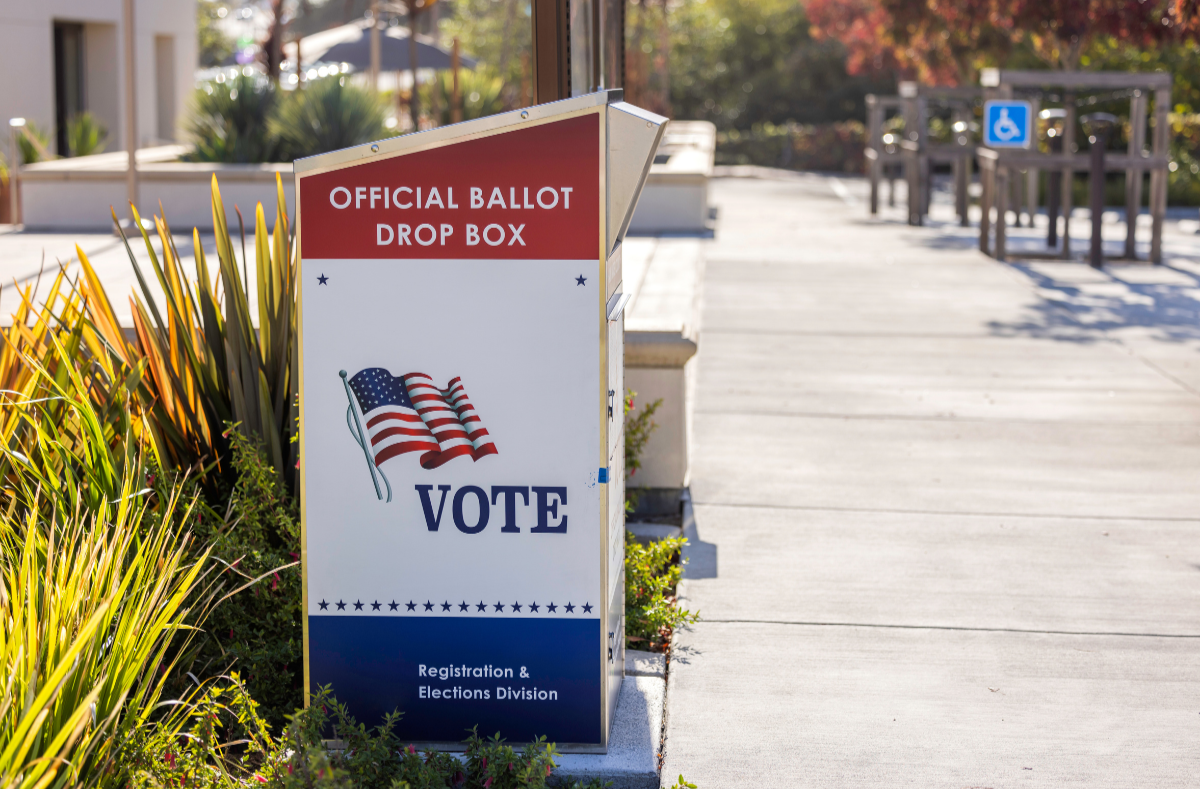
Note: All of the results are based on precinct reports as of 2:21 PM (PT) on November 9, 2026.
Statewide Constitutional Officers
The November 2026 midterm elections ushered in a monumental sea change at the national level. California was not immune to this trend. With nearly every Republican Congressional seat Democrats targeted following passage of Proposition 50, they were able to flip five seats to widen their majority in the delegation. While a dramatic balance of power will not occur in California with Democrats continuing to have overwhelming control at the executive and legislative branches, a closer look at some key constitutional and highly contested legislative races reveals there may be some significant shifts in policymaking depending on final outcomes between some moderate and progressive candidates who are locked in hotly contested swing seats.
But one thing is clear. Voter frustration over affordability, energy, and national issues created a so-called national “blue tsunami” that shifted congressional power nationwide. But it may have also spilled over into some already blue leaning districts in California and even filtered into some red-leaning districts by boosting voter turnout. Final turnout will ultimately shape key local contests. It’s important to note that while several races have been called, ballot counting continues across California with local election officials working towards the Secretary of State’s final December 11, 2026, certification deadline.
Like the national narrative, California voters have become increasingly pessimistic about the state’s ongoing budget problems, housing costs, homelessness, and rising energy and insurance costs as noted in a recent Public Policy Institute poll. With that as a backdrop, most of their attention focused on the governor’s race and who they wanted as their leader for the next four years. By a near two to one margin, voters overwhelmingly selected, Democrat Governor-elect Xavier Becerra who will make history as California’s first elected Latino governor, taking leadership of the world's fourth-largest economy.
It’s unknown how he’ll govern and what his policy priorities will be, but the real test is whether his low-key, methodical style can resist pressure from the Democrat supermajority, public sector labor groups, consumer advocates, and other stakeholders who will likely push policies that increase taxes or costs on business without focusing on needed infrastructure and affordability issues. While early signals point to a shift away from Governor Newsom’s top-down and ambitious agenda, Governor-elect Becerra’s actual approach remains to be seen.
In the meantime, Governor-elect Becerra’s most important assignment out the gate will be proposing a new state budget by January 10, 2027, and appointing hundreds of critical positions to fill his inner circle and administration.
Voters also decided key statewide constitutional offices, including Lieutenant Governor, State Treasurer, and perhaps most notably, Insurance Commissioner, a position that has taken on increased significance amid California’s ongoing insurance crisis and wildfire threats. Current Democratic State Treasurer Fiona Ma was elected Lieutenant Governor, while current Democratic Lieutenant Governor Eleni Kounalakis was elected State Treasurer. In the race for Insurance Commissioner, consumer advocate Jane Kim defeated State Senator Ben Allen, securing leadership of an increasingly consequential state office as California continues to grapple with rising insurance costs and wildfire related risks.
State Legislative and Local Races
At the same time, several competitive legislative races were in play as Democrats sought to expand their two-thirds supermajority in both the Senate and Assembly by targeting lean-Republican districts along with seats they lost to Republicans just two years ago. Before the November elections, Democrats held a 60 to 20 advantage in the Assembly and a 30 to 10 advantage in the Senate. While no official vote count has been certified, it appears Assembly Democrats are in position to pick up at least four Republican seats, and Senate Republicans are hanging on to keep at least two seats from flipping.
For most Capitol observers, the more intriguing races and elections results were playing out in several intra-party clashes between business-backed moderate Democrats against progressives in key open seats. There was also a slew of ballot propositions (14 total) voters decided on which proposed to extend or create new wealth taxes, mandate spending formulas for health care clinics, provide financial housing incentives for moderate and low-income residents, and streamline environmental permitting for specified development projects. The intra-party dynamics also consumed key local races such as the closely watched mayoral race in Los Angeles, where incumbent Democrat Karen Bass faced a strong challenge and officially conceded defeat to Democrat Socialist and L.A. City Councilwoman Nithya Raman.
While the long-term policymaking landscape will take shape over the next few months, it’s unclear what key issues Governor-elect Becerra will focus on, but he will need to get up to speed quickly. When Governor Newsom officially steps down on January 3, 2027, Governor-elect Becerra will inherit a complex set of challenges, including a long-term multibillion-dollar budget deficit, looming healthcare cuts, soaring utility rates, utility wildfire liability issues, a souring insurance market, housing shortages, homelessness, emerging issues around AI and data centers, and student performance gaps. He will also need to consider how to keep some legacy industry sectors competitive with other states and countries (i.e., film and television, goods movement, and manufacturing).
Rest assured, KP will be front and center advocating and engaging across these core policy areas when returning and new legislators get sworn in on December 7, 2026, which starts the clock for introduction of new legislation. Governor-elect Becerra and other statewide constitutional officers will get sworn in on January 4, 2027. As noted previously, several races remain in the balance, and final outcomes may not be known for at least two weeks in leading up to the official certification in December. In the meantime, below are the results of major statewide races, key ballot propositions, and select legislative races as of November 9, 2026, as reported by the Secretary of State’s Office.
Statewide Constitutional Officers:
California Governor: Dem. Xavier Beccera defeated Rep. Steve Hilton 65.6% to 34.4%.
Lieutenant Governor: Dem. Treasurer Fiona Ma defeated Rep. Gloria Romero 65.5% to 34.5%.
Attorney General: Incumbent Dem Rob Bonta defeated Rep. Michael Gates 65.5% to 34.5%.
Sec. of State: Incumbent Dem. Shirley Weber defeated Rep. Donald Wagner 66.5% to 33.5%
State Treasurer: Dem. Lt. Governor Eleni Kounalakis defeated Rep. Jennifer Hawks 65.7% to 34.3%.
State Controller: Incumbent Dem. Malia Cohen defeated Rep. Herb Morgan 65.5% to 34.5%.
Insurance Commissioner: Dem. Jane Kim defeated Dem. Ben Allen 53.5% to 46.5%.
Sup. of Public Instruction: Dem. Richard Barrera defeated Rep.Sonja Shaw 58.9% to 41.1%.
Key Ballot Propositions:
Proposition 1 Passing – allows state to borrow $11.25 billion for construction of affordable housing for low-income renters and homeless (60.9% to 39.1%).
Proposition 2 Passing - increases State's Rainy-Day Fund from 10% to 20% of general fund tax revenue (61.2% to 38.8%).
Proposition 3 Passing – permanently extends the temporary income tax increases on high-income earners to fund K-12 education (60.4% to 39.6%).
Proposition 37 Passing – creates a revenue bond allowing the state to borrow as much as $25 billion from private investors to lend to qualifying homebuyers (62.2% to 37.8%).
Proposition 40 Failing – imposes a one-time 5% tax on California residents with a net worth of $1 billion or more (46.8% to 53.2%).
Proposition 41 Failing - prohibits enforcement of any new state tax enacted on or after January 1, 2026, if the tax excludes its revenues from the state’s spending cap (45.4% to 54.6%).
Proposition 42 Passing -prohibits the state from establishing new taxes on personal property such as vehicles or intangible assets (52% to 48%).
Proposition 43 Failing -requires a two-thirds voter approval threshold at the local level for any new, increased, or extended local special tax (43% to 57%).
Proposition 44 Failing – requires community health clinics to spend at least 90% of their annual revenue directly on patient care and program services (17.9% to 82.1%).
Proposition 45 Failing -expedites state and local government environmental review of certain development projects (44.1% to 55.9%).
Key Legislative Races:
In the Assembly, all 80 seats were up for election for two-year terms with sixty-seven assembly members running for re-election, and another 13 seats were open due to term limits or retirements. In the Senate, half of the 40 seats were up for election to four-year terms with eleven senators up for reelection, and nine seats were open with several assembly members running to replace termed-out or retiring senators. Below are some of the highly watched legislative seats at risk of being flipped or where intra-party Democrat challengers will likely determine a moderate or progressive policy direction for the seat.
Assembly District 7: Rep. incumbent Josh Hoover in the Sacramento region is down by 6 points against Dem. retired teacher and superintendent Amy Slavensky (potential Dem flip).
Assembly District 12: Progressive Dem. Rohnert Park City Councilmember and labor-backed Jackie Elward is leading by 12 points in this open Dem. seat against moderate Dem. Marin County Supervisor Eric Lucan.
Assembly District 33: Assembly Rep. Leader Alexandra Macedo holds a narrow 2.4-percentage-point lead over Dem. challenger Hipolito Cerros in this Central Valley district (potential Dem. flip).
Assembly District 36: The Associated Press has declared Dem. and Imperial Mayor Ida Obeso-Martinez the winner over incumbent Rep. Assemblymember Jeff Gonzalez, marking a Dem. pickup of the seat Gonzalez flipped in 2024. Obeso-Martinez currently leads by 18 points.
Assembly District 47: Rep. incumbent Greg Wallis is currently down by nearly 10 points to Dem. Leila Namvar from the city of Indio (potential Dem. flip).
Assembly District 58: The Associated Press has declared Dem. and Riverside City Councilmember Clarissa Cervantes the winner over incumbent Rep. Assemblymember Leticia Castillo, marking a Dem. pickup of the seat Castillo narrowly flipped in 2024. Cervantes leads Castillo by 23 points.
Assembly District 66: Business-backed Dem. candidate Paul Seo is leading teacher-union backed Sara Deen by 20 points in this open Dem. seat.
Assembly District 68: Dem. Santa Ana City Councilmember and labor-backed Jessie Lopez holds a narrow 1.2-percentage-point lead over fellow Dem. Santa Ana City Councilmember and business-backed David Penaloza in this open Dem. seat.
Assembly District 70: Dem. challenger Paula Swift holds a narrow 1.2-percentage-point lead over incumbent Rep. Assemblymember Tri Ta in this Orange County seat (potential Dem. flip).
Assembly District 72: Rep. Huntington Beach City Councilmember Gracey Van Der Mark holds a narrow lead of less than one percentage point over Dem. challenger and labor-backed former professional athlete Chris Kluwe (potential Dem. flip).
Assembly District 74: Rep. incumbent Laurie Davies is leading Dem. challenger and San Juan Capistrano City Councilmember Sergio Farias by less than one percentage point (potential Dem. flip).
Senate District 6: Incumbent Rep. Leader Roger Niello is leading by just two points to Dem. challenger Sean Frame in this Rep. leaning district in the Sacramento region.
Senate District 24: The Associated Press has declared Dem. entrepreneur Brian Goldsmith the winner over Dem. West Hollywood City Councilmember John Erickson in this open Dem. seat in coastal L.A. County. Goldsmith currently leads Erickson by 11 percentage points.
Senate District 26: The Associated Press has declared Dem. community college trustee and business-backed Sara Hernandez the winner over East L.A. planning commissioner Sarah Rascón in this open Dem. seat. Hernandez currently leads Rascón by 6 percentage points.
Senate District 36: Dem. challenger Chris Duncan holds a narrow 1.6-percentage-point lead over incumbent Rep. Senator Tony Strickland in this Rep. leaning Orange County district (potential Dem. flip).
Senate District 40: Dem. San Diego attorney Mara Elliott is leading Rep. challenger Kristie Bruce-Lane by 6 points in this open Rep. leaning seat held by former Rep. Leader Brian Jones (potential Dem. flip).
Key Local Races:
L.A. Mayor: L.A. Councilwoman Nithya Raman defeated incumbent Mayor Karen Bass by 9 points at 54.7% to 45.3% with 97% of the expected votes counted and a 102,000-vote lead.